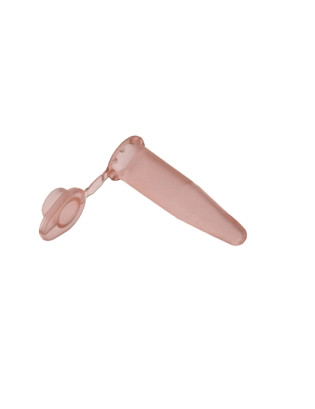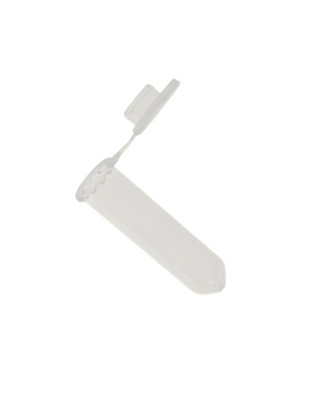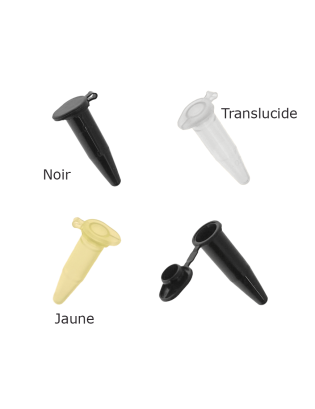
Microtube 30 mm ø 8 – 0.5 ml
30 × ø 8 mm · round bottom
€0.63 excl. VAT, per unit
€0.043 per tube in packs of 2,000
30 × ø 8 mm · round bottom
€0.63 excl. VAT, per unit
€0.043 per tube in packs of 2,000
30 × ø 8 mm · round bottom
€0.60 excl. VAT, per unit
€0.036 per tube in packs of 500
40 × ø 10 mm · round bottom
€0.84 excl. VAT, per unit
€0.060 per tube in packs of 2,000
No tubes match these criteria.
At Bolium, your online shop specialising in glass tubes and plastic tubes, you will find above various models of microtubes, available in different pack sizes to suit your needs as closely as possible.
Are you looking for centrifuge microtubes for your laboratory’s centrifuge or centrifuges? Or are you discovering microtubes, which you have already heard of without knowing exactly what they are and what advantages they can offer?
Microtubes are used in particular in laboratories and clinical settings to store and transport liquids, cells, bacteria or other substances in very small quantities.
Not only can they be extremely durable, they can also be hermetically sealed, which makes them ideal for transporting delicate substances. Let us take a closer look at the advantages of using microtubes.
One of the main advantages of using microtubes is their durability. Unlike glass tubes, which have their advantages but can unfortunately also break or crack, a microtube made of plastic is strong enough to withstand accidental drops or other impacts. These small plastic tubes are therefore an ideal choice for transporting samples from one place to another without fear of breaking them.
As well as being very durable in the ‘physical’ sense, microtubes are also resistant to many chemicals and corrosive acids, which means that your sample will remain safe even if it is exposed to harsh conditions. They are therefore perfect for medical or scientific laboratories in particular, where samples may be tested with strong chemicals or acids during certain research processes.
Another major advantage of microtubes is that they are fitted with leak-proof caps that create a secure seal around the opening of the tube. This ensures that your sample stays safely inside the tube, even under pressure or if it gets shaken about somewhat, as during a journey by motor vehicle. The lid or cap prevents any contamination from outside, and also between samples, by ensuring that each sample remains properly isolated from its surroundings until it reaches its destination. This makes them an excellent choice for transporting specimens or sensitive substances, such as bacterial cultures or samples, from one laboratory to another without fear of contamination.
As its name suggests, the microtube is very small, which makes storage much easier: with a tube of this size, you can keep, store or move a large number of microtubes, all in a relatively small space. To take the example of a medical or scientific testing laboratory again, you can fit a far greater number of samples into the same storage space. This will be particularly practical if you regularly work with large numbers of small samples. And if that is indeed part of your working routine, because microtubes are lighter and, as we saw above, do not present the risk of breakage, you can more easily hold a larger number of them in your hands when moving around or during certain procedures, which saves you time.
As you can see, microtubes offer many advantages when it comes to storing and transporting small, delicate samples such as cells, bacterial cultures, tissue samples, etc.