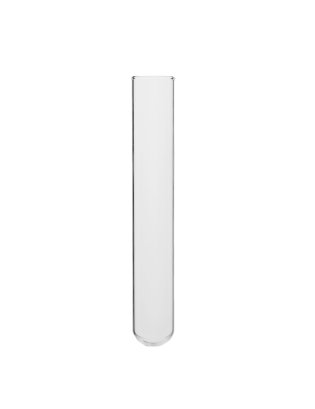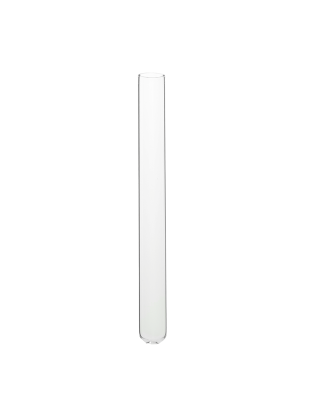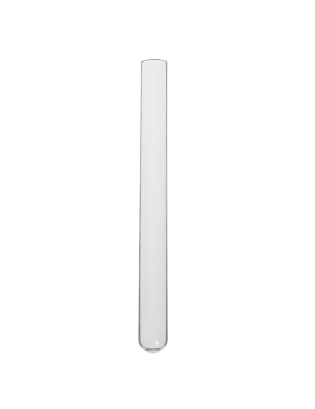
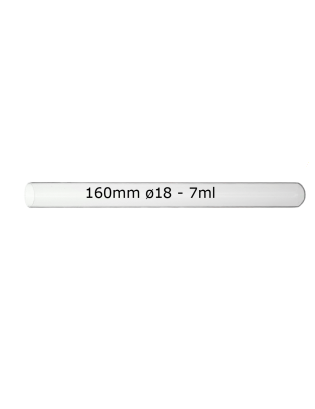
Round-bottomed tube 160 mm ø 18 – 7 ml
160 × ø 18 mm · round bottom
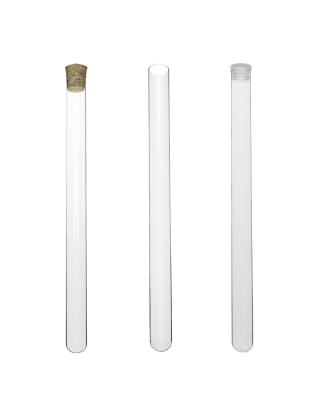
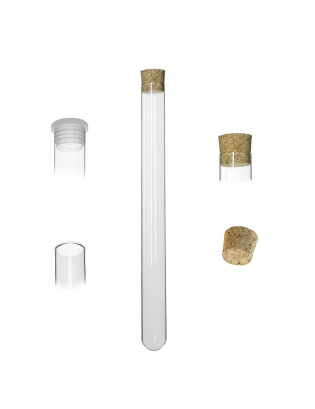
Optional stopper · price without stoppers
€1.59 excl. VAT, per unit
€0.253 per tube in packs of 5,000
The right glass tubes, use by use.
160 × ø 18 mm · round bottom
Optional stopper · price without stoppers
€1.59 excl. VAT, per unit
€0.253 per tube in packs of 5,000
100 × ø 16 mm · round bottom
Optional stopper · price without stoppers
€2.00 excl. VAT, per unit
€0.178 per tube in packs of 4,680
150 × ø 16 mm · round bottom
Optional stopper · price without stoppers
€1.87 excl. VAT, per unit
€0.202 per tube in packs of 5,000
180 × ø 14 mm · round bottom
Optional stopper · price without stoppers
€1.77 excl. VAT, per unit
€0.179 per tube in packs of 4,752
180 × ø 17.5 mm · round bottom
Optional stopper · price without stoppers
€1.11 excl. VAT, per unit
€0.189 per tube in packs of 3,408
200 × ø 20 mm · round bottom
Optional stopper · price without stoppers
€2.79 excl. VAT, per unit
€0.228 per tube in packs of 5,040
No tubes match these criteria.
Beyond the packs shown, or to combine several tubes in a single order, send your request: Bolium will reply with a quote.
From 40 to 200 mm in length, from 10.5 to 20 mm in diameter and from 2 to 48 ml in capacity, we offer many models of test tubes or round-bottomed glass tubes at Bolium. You will need to study these dimensions carefully, along with the round shape of the tube bottom and any stands you may need, before you buy glass test tubes for your intended use. Likewise, you may also need to plan on matching one or more models with the right stoppers.
We offer a wide choice of sizes for your glass tubes and, for each of them, several different quantities. This way, you will be able to find the offer that suits your needs, whatever the field in which the test tube or glass tube will be valuable to you: healthcare, research, decoration, floral art, etc.
As you know, test tubes are very useful in the fields of healthcare and research. In the medical sector, for example, even though test tubes can be reusable, healthcare professionals prefer to have disposable tubes. They are made of borosilicate glass to reduce changes in pH (potential of hydrogen, which measures how acidic or basic a solution is) and contaminants. The borosilicate glass of test tubes has the particular property of withstanding very high temperatures. Of course, they will be discarded to avoid any mixing with tissue previously placed in them because, as you know, great care must be taken when it comes to healthcare.
Highly prized because they are specifically suited to tests and studies in scientific settings, laboratory tubes or glass test tubes are also very practical in other respects, since glass means easy cleaning. Indeed, if you use a tube brush that you clean regularly, you can reuse your glass tube. Of course, whether in a scientific setting or not, it is best always to put the same kind of substance in the same tube to avoid mixing. For example, it is important to make sure that you always put food products in the tube if you put food products in it the first time. Indeed, even with thorough cleaning, a few invisible residues may well remain. You should therefore use the same type of substance so that you can use your glass tubes with complete peace of mind. It stands to reason, but it is always worth a reminder.
In the field of design, professionals generally like rounded shapes and so create decorative items for the home with round-bottomed glass tubes. For example, designers create small pendants with glass tubes to create a cosy, snug atmosphere.
As a chef, when you add your little touch of balsamic vinegar or sesame oil, glass tubes kept ready on a wooden stand will become very handy little vials that stop the seasoning running too far across the plate you are preparing. Combining the useful with the pleasant, with visual appeal to impress your customers, the round-bottomed glass tube already is, or will very soon become, a must-have in your kitchen.
If you are the manager, a buyer or a department head in a shop selling decorative items, or in one specialising in cooking or baking, you will make a splash with your glass tubes. You can either sell them directly or use them to create a decoration or an arrangement to sell. For example, choose a glass tube with a cork stopper. Make a hole in the cork stopper and insert the stem of an artificial plant.
Glass tubes should not be chosen at random. Take stock of the final purpose of the round-bottomed glass tubes so that you can also plan the stands and all the accessories you might need, as well as the quantities required.